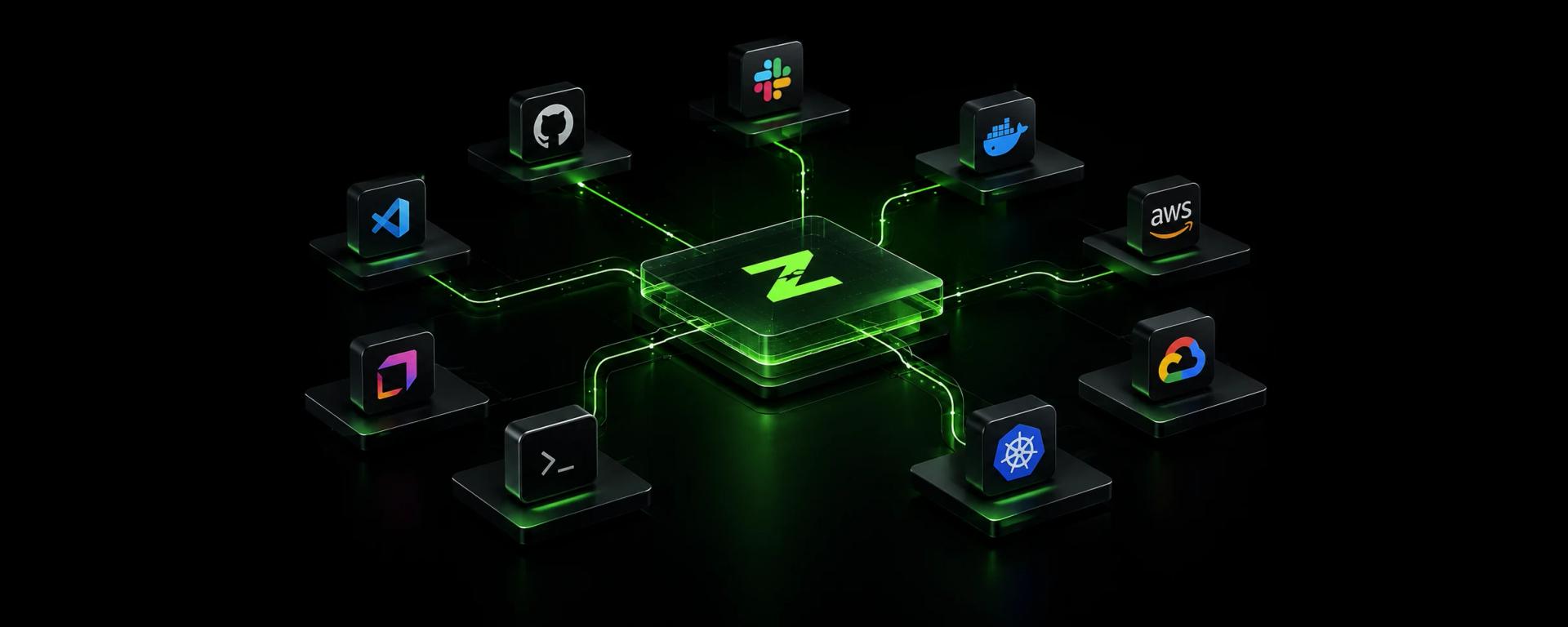
One control layer.
Every agent behind it.
Integration is a route change, not a rebuild. Your agent stack keeps working as it does today.
1
Decision point for every agent call
0
Safety checks rebuilt per team
<50ms
Target added latency in the request path
5min
Default lifetime of a scoped credential
The details that decide if it fits your stack
The questions platform teams ask us first - answered by how the layer is built.
Framework & MCP coverage
In-house stacks, agent frameworks, MCP servers and vendor agents cross the same boundary the same way.
Workload identity built in
Requests arrive carrying the agent, the workload it runs in and the human principal - resolved before any rule fires.
Events into your tooling
Structured decision events stream into the SIEM and observability stack you already operate.
Runs where you do
Hosted for the fastest start, or customer-controlled inside your own cloud when traffic can't leave.
Every action reaches a landing
Every action an agent takes stops here first, then continues, waits for a person or turns back.
Restart a staging service
Low risk, so it runs
Deploy to production
Waits for on-call to approve
Delete a production database
Stopped before it executes
“Agents should move fast. Their actions shouldn't go unchecked.”
Why one enforcement point
Building guardrails into every agent and every tool doesn't scale. One boundary does.

Built once, used everywhere
A single enforcement point covers every agent and tool, instead of custom checks wired into each integration.
No rewrite of your agent stack
Agents keep their frameworks and tools. Traffic routes through the boundary instead of through new code.
Short-lived access by default
Agents get scoped access for the task at hand, so there are no long-lived keys to rotate or leak.
Fits the tooling you run
Decisions and events flow into the logging, alerting and approval tools your teams already use.
Not ready for a pilot? Get early access instead.